
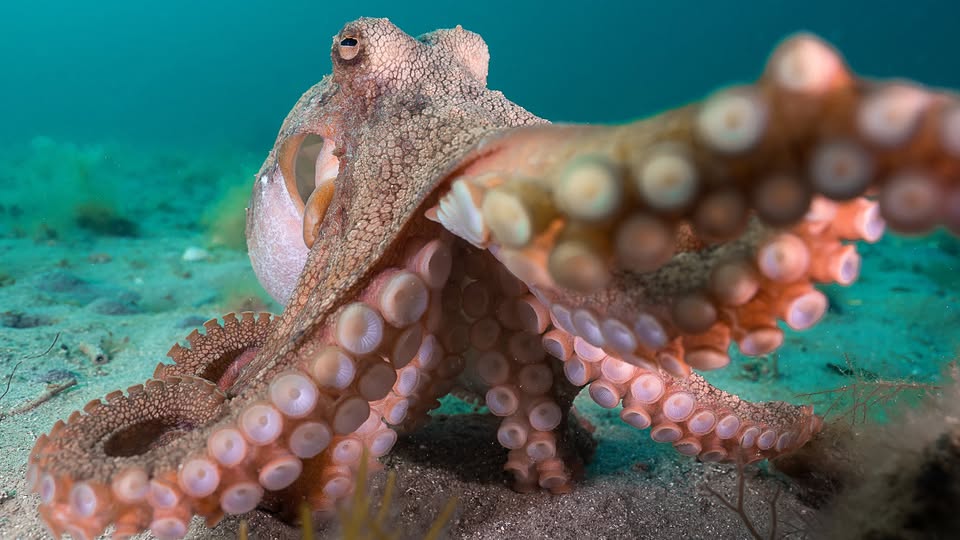
Vegan Australia has called on the Australian Government to refuse approval of Western Australia's commercial octopus fisheries, arguing that octopuses are sentient individuals with a right to their own lives, bodies and freedom.
The call comes as opposition to octopus farming grows internationally. In July 2026, Spanish company Nueva Pescanova abandoned plans for a large commercial octopus farm in the Canary Islands following years of campaigning and regulatory difficulties. The withdrawal was formally accepted by the port authority in October.
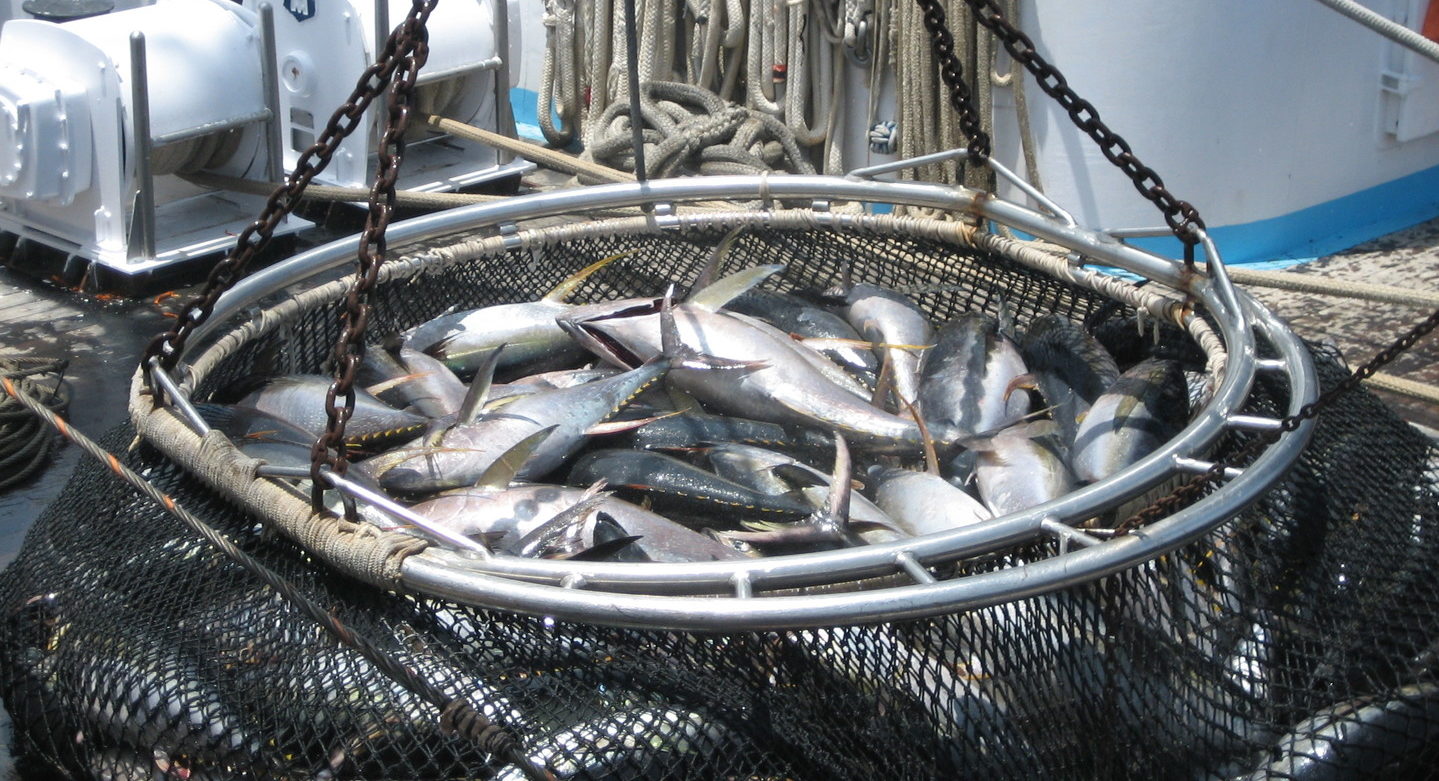
Yet while new octopus farming ventures are facing opposition, the capture and killing of free-living octopuses continues. Western Australia's commercial fisheries reported nearly 780 tonnes of octopuses caught in 2025, estimated to represent hundreds of thousands to more than a million individuals.
Most are Western Rock Octopuses (Octopus djinda), a species native to Australian waters. The Western Australian Government anticipates further commercial expansion, even though important research into octopus populations remains unfinished.
Vegan Australia's submission argues that ecological sustainability and justice are fundamentally different questions. Maintaining an animal population for continued commercial exploitation does not justify killing its individual members. This principle applies equally to animals raised in captivity and those living freely in their natural environments.
The submission also raises concerns about increasing fishing effort, gaps in scientific monitoring and three whale entanglements attributed to octopus fishing gear in 2025.
Vegan Australia calls for recognition of the fundamental rights of octopuses and all other animals, and a transition to end animal exploitation within 10 years.
Read the full submission below.
To: The Director
Sustainable Fisheries Section
Department of Climate Change, Energy, the Environment and Water
Vegan Australia welcomes the opportunity to comment on the Western Australian Department of Primary Industries and Regional Development's September 2026 application for reassessment of the Western Australian Octopus Resource under the Environment Protection and Biodiversity Conservation Act 1999 (EPBC Act). We oppose approval as a wildlife trade operation, inclusion of octopuses taken from these fisheries on the list of exempt native specimens and accreditation of the management arrangements. Our opposition rests primarily on the rights of individual octopuses, alongside concerns about expansion, scientific uncertainty and interactions with protected animals [2].
Vegan Australia is a national organisation advocating for veganism and recognition of the fundamental rights of all animals. We envision a world in which our fellow animals live free from human use and ownership. Our position is based on justice for individuals, including their interests in and their rights to their own lives, bodies and freedom.
Animals are not ours to use. Octopuses are sentient individuals, not merely units of biomass or commercial resources. Each has an interest in continuing their own life and avoiding harm. Deliberately capturing and killing them violates those interests regardless of whether the population is classified as sustainable. A fishery can maintain a viable breeding population while taking the lives of hundreds of thousands of its members.
Research on cephalopods provides substantial evidence of sophisticated learning, memory and flexible behaviour, alongside evidence relevant to their capacity to experience pain. The 2024 New York Declaration on Animal Consciousness identifies a realistic possibility of conscious experience in many invertebrates, including cephalopod molluscs [1]. Octopus cognition is an especially striking challenge to human assumptions about other animals, but exceptional intelligence is not the basis of their rights. Individuals do not need human-like capacities, nor unusually complex problem-solving abilities, to have interests worthy of respect.
Ecological sustainability and justice are different questions. Population stability does not justify the routine killing of individuals. We would not accept maintaining human population numbers as a justification for systematically killing people. Species membership alone cannot justify a different fundamental standard for octopuses.
The EPBC Act assessment concentrates on ecologically sustainable management, stock status, bycatch and protected-species interactions. It does not directly ask whether the commercial taking of octopuses' lives is justified. This is a fundamental limitation of the assessment framework, not evidence that the interests of individual octopuses are irrelevant.
The language of "harvest", "resource" and "specimens" distances decision-makers from the reality of systematic capture and killing. Commercial catch is principally reported by weight. The application states that 779,717 kg of octopuses were retained in 2025 [2, Appendix 2, p. 34]. As a broad illustration, at an assumed average individual weight of 0.5–2 kg, this represents approximately 390,000–1,560,000 octopuses killed in that year. This is a sensitivity range, not a measured population count: the application does not provide the mean weight needed to determine the true figure. Importantly, operators already record the numbers retained and released in daily logbooks [2, p. 20]. The Department should publish the actual annual number of individual octopuses captured and killed, not only their combined weight.
Vegan Australia calls for an orderly transition to end the exploitation of animals within 10 years, supporting affected workers and communities to move into livelihoods that do not depend on exploiting animals. The objective is to end the capture and killing of octopuses and other marine animals, whether for commercial or non-commercial purposes, rather than indefinitely maintain populations available for human use.
The application reports 779.7 tonnes of octopuses commercially caught across Western Australia in 2025, compared with 267.8 tonnes in 2020 [2, Appendix 2, p. 34]. The principal Octopus Interim Managed Fishery took approximately 747 tonnes in 2025. The application anticipates continued growth with more vessels and operators, and the long-term allowable catch range of 500–1,000 tonnes expressly anticipates further expansion [2, pp. 9, 16]. These figures highlight how ecological management can treat a rising scale of deliberate killing as a development objective.
Fishing effort also rose sharply: the number of trap cradles set increased from 638,000 in 2024 to 822,000 in 2025, while the total length of line set rose from approximately 30,000 km to 37,000 km [2, p. 11]. The application reports that the total area fished expanded from approximately 2,700 km² in 2021 to 3,900 km² in 2025 [2, p. 23]. These changes deserve scrutiny, without assuming that increased effort by itself proves stock depletion.
The application reports that standardised catch per unit effort remained above the management target in 2025, and we do not claim that its own stock assessment establishes overfishing [2, pp. 16, 22]. Nevertheless, it states that there is no ongoing fishery-independent monitoring and that the latest published stock assessment report dates from 2018; an updated report is expected in mid-2027 [2, pp. 7, 20]. Current research is investigating population connectivity, reproduction, stock structure and density, explicitly to inform expansion [2, p. 31]. The Department should explain why the proposed approvals are justified before this work has been completed and independently considered. Even a more certain sustainability assessment would not resolve the underlying objection to killing sentient individuals.
The application describes active traps that close to prevent octopuses escaping and passive shelter pots that are retrieved with an octopus inside [2, pp. 5, 10–12]. It provides little information about what happens to octopuses after retrieval or the methods by which they are killed. Such omissions reflect the emphasis on populations and fishing operations rather than the lives of the affected animals. The issue is not simply whether a method of killing could be altered: no method can justify treating octopuses as resources for human use.
The application records three whale entanglements attributable to octopus fishing gear in 2025. One whale was successfully disentangled, while two were only partially disentangled [2, p. 27]. It also acknowledges that existing whale entanglement mitigation measures had been applied inconsistently, and says outcomes of an October 2025 workshop will be made public [2, p. 28]. The Department should establish the outcomes for those whales, explain the effectiveness of current measures and publish and assess the workshop findings.
There are other evidence gaps. Bycatch reporting was updated in March 2025, but the resulting information had not yet been formally reported or comprehensively assessed when the application was prepared [2, pp. 25–26]. The Department should publish that evidence and explain how uncertainty is reflected in its assessment. These concerns about unintended impacts do not diminish the central objection: the octopuses being deliberately captured and killed are themselves individuals whose interests matter.
A fishery does not become just because enough octopuses remain available to be killed in future years. The application envisages expanded commercial capture while substantial research remains unfinished. Vegan Australia urges the Commonwealth to refuse the proposed approvals and to move beyond a framework that treats free-living sentient individuals as resources for human use. Octopuses, whales and all our fellow animals deserve respect for their own lives, bodies and freedom.
Greg McFarlane
Vegan Australia
Unsubscribe at any time. Your details are safe, refer to our privacy policy.
© Vegan Australia | Registered as a non-profit charity by the ACNC | ABN 21 169 219 854