
Vegan Australia has urged the Australian Government to refuse three proposed approvals for the Commonwealth Skipjack Tuna Fishery. Commercial tuna fishing in Australian waters of the Pacific and Indian Oceans has been inactive since 2009, yet new government approvals could allow it to resume.
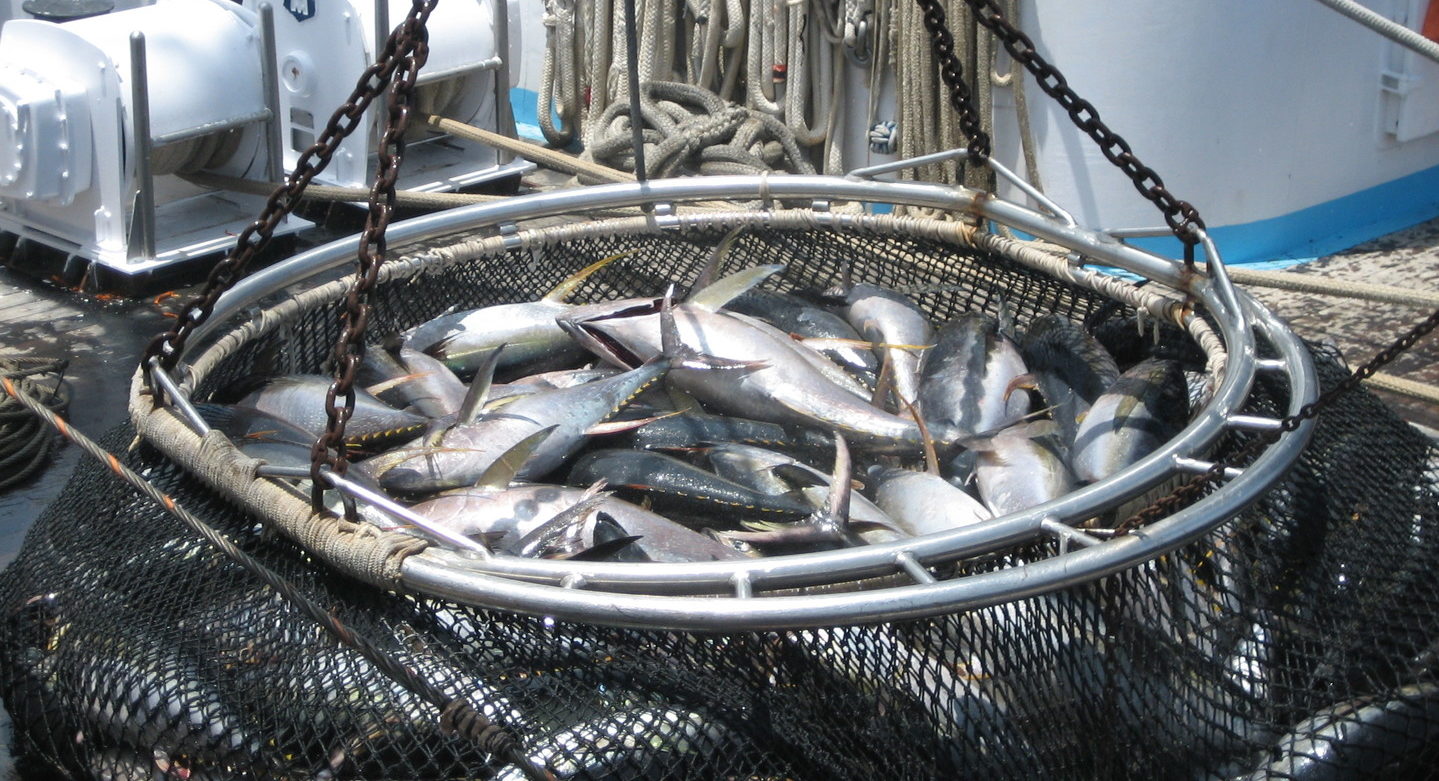
The Australian Fisheries Management Authority's application reports recent interest in restarting fishing in the Eastern (Pacific Ocean) fishery. It also describes a catch allocation of 30,000 tonnes and the use of purse-seine nets that can encircle entire schools of tuna.
Our submission argues that tuna are sentient individuals with rights to their own lives, bodies and freedom. A fishery does not become just because a population is assessed as sustainable: the deliberate capture and killing of its individual members remains an animal rights issue.
We also question the reliance on ecological risk assessments dating from 2007 and 2009, including outstanding residual risk assessment work. These concerns reinforce, rather than replace, our fundamental objection to treating free-living animals as commercial resources.
Vegan Australia calls for the refusal of all three approvals and for an orderly transition to end animal exploitation within 10 years.
Read the full submission below.
To: The Director
Sustainable Fisheries Section
Department of Climate Change, Energy, the Environment and Water
Vegan Australia welcomes the opportunity to comment on the Australian Fisheries Management Authority's (AFMA) 2026 application for assessment of the Commonwealth Skipjack Tuna Fishery under the Environment Protection and Biodiversity Conservation Act 1999 (EPBC Act). We oppose approval as a wildlife trade operation, inclusion of specimens taken in the fishery on the list of exempt native specimens and accreditation of its management arrangements under Part 13. Our opposition rests primarily on the rights of individual tuna, alongside concerns about reopening fisheries that have been inactive for many years and relying on historic ecological risk assessments [2].
Vegan Australia is a national organisation advocating for veganism and recognition of the fundamental rights of all animals. We envision a world in which our fellow animals live free from human use and ownership. Our position is based on justice for individuals, including their interests in and their rights to their own lives, bodies and freedom.
Animals are not ours to use. Skipjack tuna are sentient vertebrates, not merely units of biomass or commercial resources. Each tuna has an interest in continuing their own life, maintaining bodily integrity and avoiding harm. Deliberately capturing, confining and killing these individuals violates those interests regardless of whether their populations are assessed as sustainable.
Scientific research provides evidence relevant to pain and subjective experience in fishes [1, 3, 4]. The 2024 New York Declaration on Animal Consciousness recognises at least a realistic possibility of conscious experience in all vertebrates, including fishes, and states that this possibility should not be ignored in decisions affecting them [1]. Animal rights do not depend on human-like intelligence or proof of a particular level of pain: sentient individuals have interests that warrant respect in their own right.
Ecological sustainability and justice are different questions. A fishery may maintain a population above a management threshold while routinely killing many of its members. We would not accept population stability as a justification for systematically killing humans. Species membership alone cannot justify treating the lives of tuna as expendable.
The EPBC Act assessment focuses on ecologically sustainable management, population status and interactions with protected species. It does not directly ask whether the commercial capture and killing of tuna is justified. This is a limitation of the assessment framework, not evidence that the interests of individual tuna are irrelevant.
Terms such as 'harvest', 'stock' and 'specimens' can obscure what is at stake. The proposed decisions concern authorisation of an activity that deliberately takes the lives of free-living animals. AFMA reports commercial quantities primarily in tonnes, without identifying how many individual tuna would be killed if fishing resumed. The Department should acknowledge individual deaths rather than treating aggregate catch weight as a sufficient account of the activity.
The application separately addresses impacts on sharks, rays, turtles, cetaceans, seabirds and other animals who may be caught incidentally [2, sections 6 and 8]. Safeguards for these animals do not address the deliberate capture and killing of tuna. The ethical distinction between intended and unintended deaths reflects the commercial purpose assigned to different animals, rather than any fundamental difference in their interests. Preventing bycatch would not make killing tuna acceptable.
AFMA states that neither the Eastern nor the Western Skipjack Tuna Fishery has operated since 2009, and that recent interest has been expressed in recommencing fishing in the Eastern fishery [2, p. 3]. In 2025 there were 17 Eastern and 14 Western fishing permits but no active vessels; the estimated value and catch in 2023-24 were both zero [2, pp. 5, 7].
The application describes an Eastern catch allocation of 30,000 tonnes. There is no current catch limit for the Western fishery, although an Indian Ocean Tuna Commission measure would trigger a limit if Australia exceeded 10,000 tonnes in two consecutive years [2, p. 8]. These are management allowances, not forecasts of future catches. Nevertheless, the proposed approvals could facilitate renewed commercial killing after a long period without fishing in these fisheries.
The absence of activity should not be treated as an economic deficiency that must be remedied. It offers an opportunity to end authorisation for this exploitation rather than create conditions for its resumption. The application also confirms that there is no statutory management plan and that the domestic harvest strategy, developed in 2008, has not been reviewed since its inception [2, pp. 5, 9].
AFMA describes purse-seine fishing in which a large net encircles a school of tuna, is drawn closed and is hauled to concentrate the enclosed animals before they are brought aboard. Permit conditions allow nets up to 1,480 metres long and 280 metres deep [2, p. 6]. These dimensions illustrate the scale of confinement and capture that renewed fishing could involve. The application provides little account of the experience of individual tuna during capture or how they would be killed. No method of killing, however, can establish the legitimacy of treating them as commercial resources.
The application identifies ecological risk assessments undertaken in 2007 and 2009. The 2007 productivity susceptibility assessment categorised 124 species as high risk under its modelled fishing effort, and states that the residual risk assessment of those species has yet to be undertaken. A separate 2009 rapid quantitative assessment found none of the 115 assessed teleost and chondrichthyan species to be high risk [2, p. 19]. These are distinct assessments with different methods and scopes; the 124 figure should not be read as a finding that those species are presently at high risk.
AFMA considers the historic risk profile current because the fishery has remained inactive. However, the lack of fishing activity also means there has been no recent operational evidence from these fisheries with which to assess potential impacts of renewed purse-seine operations. The Department should examine and explain the currency and limitations of the historical assessments, including the outstanding residual risk work, rather than assume that inactivity establishes the safety of future activity. Even a more complete ecological assessment would not justify deliberate killing of sentient individuals.
The application also states that catching live bait is permitted under specified conditions [2, p. 21]. These animals, as well as any tuna and other fishes caught incidentally, have their own interests and should not be treated simply as inputs or secondary consequences of a commercial operation.
A fishery does not become just because enough tuna remain available to be killed in future years. The Commonwealth Skipjack Tuna Fishery has been inactive for approximately 17 years, yet the application seeks continued approvals that could enable deliberate capture and killing to resume. Vegan Australia urges the Commonwealth to refuse all three proposed approvals and move beyond a framework that treats free-living sentient individuals as resources for human use. Tuna and all our fellow animals deserve respect for their own lives, bodies and freedom.
Greg McFarlane
Vegan Australia

Unsubscribe at any time. Your details are safe, refer to our privacy policy.
© Vegan Australia | Registered as a non-profit charity by the ACNC | ABN 21 169 219 854