
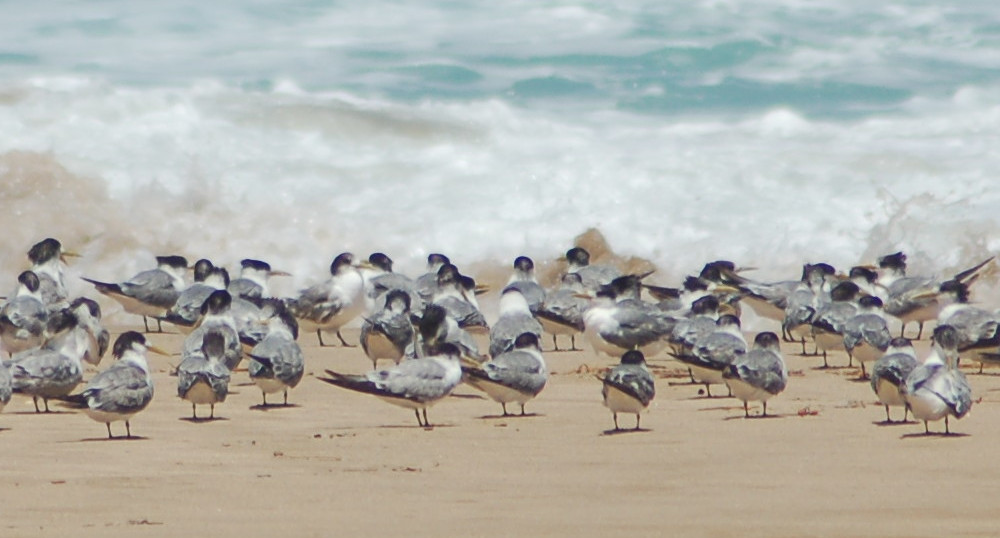
H5 bird flu is now spreading through Australia's free-living animals. Since the first confirmed Australian detections in June 2026, cases have been recorded across several states and territories. By September, the Australian Government had recorded 652 positive H5 bird flu events in free-living animals and more than 51,000 hotline reports. Cases have included greater crested terns found at Sydney beaches.
The public discussion has mostly framed bird flu as a biosecurity problem: how to detect it, contain it and protect animal agriculture. That framing is incomplete. Bird flu is not simply a disease of free-living birds. It is a disease shaped, intensified and spread by human use of animals.
Free-living birds and other animals are not the cause of this crisis. They are among its victims.
The current outbreak is already causing serious harm. ABC News has reported mass mortality events involving more than 1,000 crested terns in South Australia, as well as penguins in Tasmania, with experts warning that the outbreak is now established in Australia and that further deaths are expected.
The threat is not limited to birds. H5 bird flu can infect other animals, including marine mammals. The Australian Government notes that, overseas, marine mammals and animals such as cats, goats, alpacas and pigs have been affected. Recent Australian reporting has also raised concern about mammals, including seals, dolphins and foxes.
Macquarie Island shows the scale of what may be ahead. The Australian Antarctic Division has announced plans to temporarily withdraw staff from the island because of concern about the psychological risk to expeditioners if bird flu causes mass deaths among animals there. The island is currently free of the virus, but authorities are preparing for the possibility of severe impacts during the elephant seal breeding season.
These animals are not statistics, disease units or environmental assets. They are individuals. They have their own lives, relationships and interests. Their suffering matters.
As bird flu spreads, free-living animals are increasingly being treated as threats. People are warned not to touch them. Their bodies are collected and tested. Their movements are monitored. Animals labelled as "feral" are described as possible spreaders. Animal industry and government communications repeatedly emphasise the need to protect farmed birds and animal agriculture
The National Farmers' Federation's own summary of the issue is revealing. In a recent newsletter, it reported that Australian mammals had caught H5N1 for the first time, with a confirmed seal case and a suspected fox infection, and said that concern about scavenging animals had prompted renewed calls to cull animals labelled as "feral". It also noted additional federal funding to fight bird flu.
This response follows a familiar pattern. Free-living animals are treated as vectors, pests or reservoirs. Farmed animals are treated as property to be protected. The animal-using industries that helped create the conditions for disease are treated as essential.
That shifts attention away from the real cause: human domination and use of animals.
Most emerging infectious diseases do not arise in isolation from human activity. They emerge from our relationships with other animals: breeding them, confining them, trading them, transporting them, hunting them, eating them and destroying the habitats they need to live freely.
The United States Centers for Disease Control and Prevention says that most new or emerging infectious diseases in people are zoonotic. These diseases are driven by human use of animals. Animal agriculture, hunting, confinement, transport, trade and habitat destruction create the conditions in which diseases emerge, mutate and spread.
These concerns are not new. Years before the COVID-19 pandemic, infectious disease experts were already discussing how human food, social, cultural and economic systems drive the emergence of zoonotic diseases through the way humans use animals.
Vegan Australia made this point during the coronavirus pandemic in 2020. Coronavirus, SARS, swine flu, bird flu and many other zoonotic diseases are not random misfortunes. They are consequences of animal use. When animals are treated as resources to be farmed, hunted, confined, transported, traded and killed, the system creates the conditions for disease.
Bird flu fits this pattern.
Avian influenza viruses exist in birds, and free-living birds can carry them over long distances. But that fact must not be used to shift blame onto free-living animals.
The global bird flu crisis has been driven by human use of birds. The Food and Agriculture Organization of the United Nations states that, although long-distance spread is often facilitated by migrating birds, "poultry trade remains the most important risk factor for introduction and local spread of avian influenza viruses". It also says that once avian influenza is introduced to a country or region, it can quickly spread through bird trade, especially where trade is less controlled and biosecurity is poor.
This is the part of the story that is too often left out. Bird flu is not simply something that arrives from nature. It has been shaped by animal agriculture: by breeding birds in vast numbers, confining them, moving them, trading them, selling them and killing them for food.
The problem is not that free-living birds exist. The problem is that humans have built global systems that turn birds into commodities.
Australian authorities have repeatedly said that there have been no detections in farmed birds or the agricultural production system. That is an important factual point. It means we should not claim that a specific Australian farm caused the present outbreak.
But it does not absolve animal agriculture.
The Australian outbreak is part of a global bird flu crisis. That global crisis has been created and amplified by human animal use. When governments focus mainly on protecting animal agriculture from bird flu, they are protecting one of the systems that helped create the broader risk.
Better surveillance, reporting and public warnings are necessary. People should not touch sick or dead birds or other animals. Dogs and cats should be kept away from free-living animals. Sick or dead animals should be reported to the relevant authorities. These practical steps matter.
But they do not address the root cause.
The answer to bird flu is not stronger biosecurity around animal-using industries. It is not killing more animals who are labelled as pests or risks. It is not finding better ways to continue breeding and killing birds while trying to contain the diseases that follow.
A genuine response must question the animal-using systems themselves.
The animals dying from bird flu did not create animal agriculture. They did not build live bird markets, breeding facilities, transport networks or slaughterhouses. They did not create the human demand for eggs and flesh. They did not decide that birds should be bred into existence by the billions, confined and killed for profit.
They are suffering the consequences of human systems.
When bird flu is described only as a biosecurity issue, the ethical issue is hidden. Animals are being harmed not only by the virus, but by the way humans see them: as food, property, threats, disease carriers or populations to be managed.
A rights-based response rejects that framing.
Animals are not resources. They are not disease-management units. They are not acceptable collateral damage in the protection of animal agriculture. They are individuals with a right to their own lives, bodies and freedom.
Bird flu is a warning. It shows again that animal use harms not only the animals directly bred, confined and killed, but also free-living animals, ecosystems and public health.
We should not blame free-living animals for a crisis created by human domination of animals. We should ask why those systems continue to be defended.
If you see sick or dead birds or other animals:

Unsubscribe at any time. Your details are safe, refer to our privacy policy.
© Vegan Australia | Registered as a non-profit charity by the ACNC | ABN 21 169 219 854