
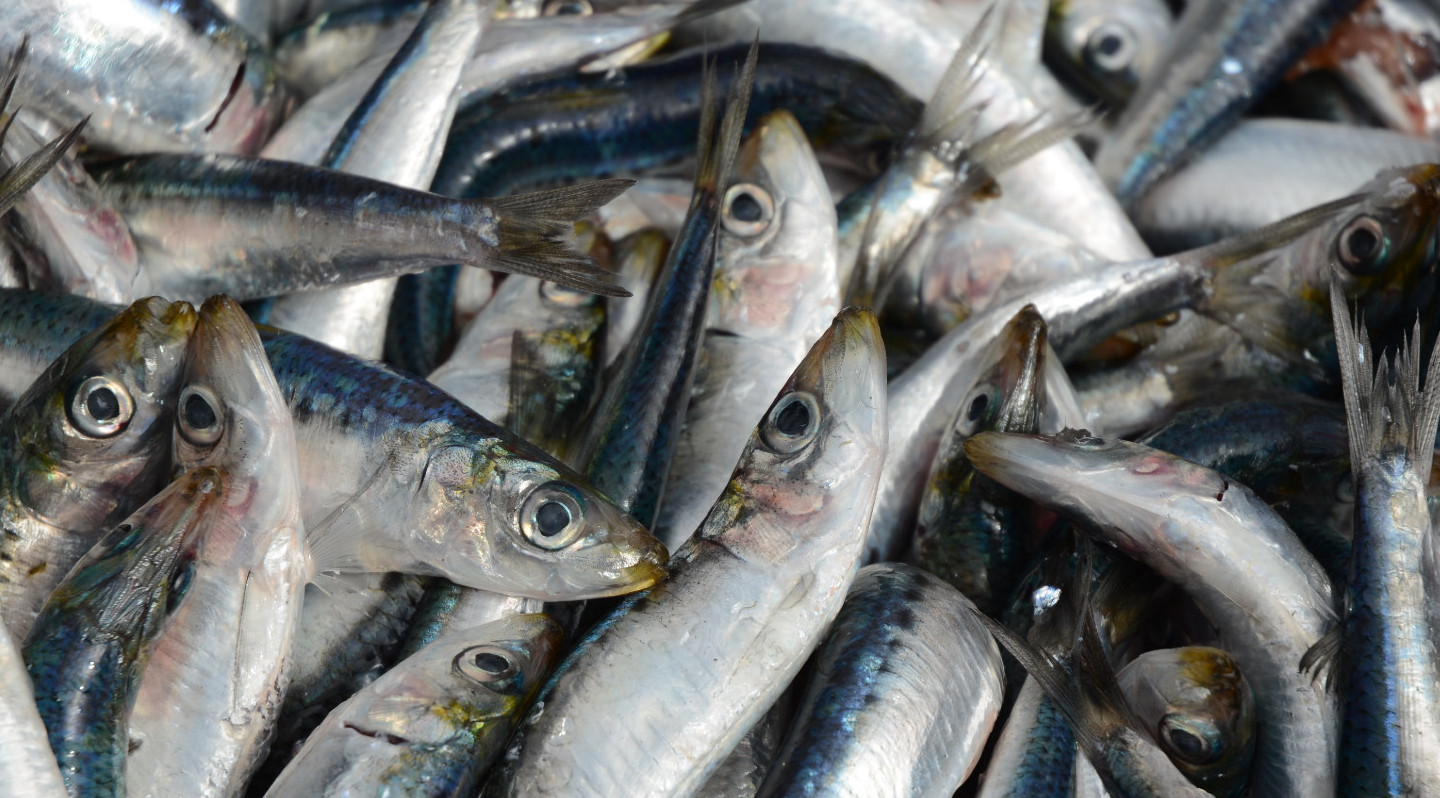
Sardines are sentient individuals with a right to their own lives, bodies and freedom. They are not simply a resource to be commercially exploited.
In a submission to the Australian Government, Vegan Australia has opposed the proposed approval of the South Australian Sardine Fishery, which permits the commercial capture and killing of up to 50,000 tonnes of sardines each year, potentially up to a billion individual fishes, who are then used to feed farmed tuna.
The submission argues that ecological sustainability does not justify the systematic killing of individual sardines.
It also raises concerns about the fishery's impacts on dolphins and marine ecosystems, and challenges a regulatory framework that treats free-living animals as resources for human use.
Ecological sustainability is not the same as justice for individual animals. A population can remain abundant while countless individuals are killed: sustainability is not justice.
Read the full submission below.
To: The Director
Sustainable Fisheries Section
Department of Climate Change, Energy, the Environment and Water
Vegan Australia welcomes the opportunity to comment on the South Australian Government's application dated 3 September 2026 for Commonwealth approval of the South Australian Sardine Fishery under the Environment Protection and Biodiversity Conservation Act 1999 (EPBC Act). We oppose approval as a wildlife trade operation, inclusion of fishes taken from the fishery on the list of exempt native specimens and accreditation of the management arrangements. Our opposition rests on the rights of individual fishes, as well as questions raised by the application about ecological management and interactions with protected animals [2].
Vegan Australia is a national organisation advocating for veganism and the recognition of the fundamental rights of all animals. We envision a world in which our fellow animals live free from human use and ownership. Our position is based on justice for individuals, including their interests in and their rights to their own lives, bodies and freedom.
Animals are not ours to use. Sardines are living, sentient vertebrates, not merely units of biomass or commercially available resources. Each sardine has an interest in continuing their own life and avoiding harm. The commercial capture and killing of these individuals is a violation of those interests, irrespective of how many sardines remain in the sea.
Ecological sustainability and justice are different questions. A fishery may maintain a population above a management threshold while deliberately killing very large numbers of its members. Maintaining a population for future commercial use does not provide an ethical justification for taking the lives of individuals. We would not accept population stability as a justification for the routine killing of humans. Species membership alone cannot justify applying a fundamentally different standard to fishes.
The 2024 New York Declaration on Animal Consciousness recognises at least a realistic possibility of conscious experience in all vertebrates, including fishes, and says that such possibilities should not be ignored in decisions affecting animals [1]. Recognition of individual animals does not depend on demonstrating human-like intelligence or social behaviour. Sentience and the interests of the individual are sufficient reasons to take their lives seriously.
The current process asks whether the fishery satisfies requirements for ecologically sustainable management and protected-species interactions. It does not directly ask whether humans should be permitted to kill sardines for commercial purposes. This is a fundamental limitation of the framework rather than evidence that the interests of individual fishes are irrelevant.
The terms "harvest" and "specimens" obscure what is at stake. The decisions concern the systematic capture and killing of free-living animals. Government assessments should accurately describe the activity and acknowledge its impacts on the animals whose lives are taken, not consider them solely as populations or commodities.
Vegan Australia calls for a transition away from commercial fishing, with an orderly process supporting affected workers and communities to move into livelihoods that do not depend on exploiting animals. The appropriate long-term objective is to end the taking of fishes, rather than make the killing more efficient or indefinitely sustainable.
The application proposes a 2026 total allowable commercial catch of 50,000 tonnes of sardines and states that sardines are used primarily as feed for farmed southern bluefin tuna. It reports that the 2025 spawning biomass estimate was 556,957 tonnes, the highest recorded since 1995, and classifies the stock as sustainable [2, pp. 7-8, 19]. These figures highlight the distinction between a population-level assessment and the interests of individual fishes. A stock can be classified as sustainable while very large numbers of individuals are deliberately killed, predominantly to sustain the exploitation of other fishes.
The application describes an ecosystem risk assessment undertaken in 2021, categorising impacts on trophic structure as "Low", and expressly states that "There are no current decision rules that trigger management actions related to ecosystem management" [2, pp. 16, 27]. The Department should explain how these arrangements protect the ecological relationships of sardines with seabirds, marine mammals and other predators, particularly in the context of environmental changes, including the 2025-26 algal bloom. It should identify the evidence supporting the risk ratings and explain what would prompt a timely management response to emerging ecosystem impacts.
The application records serious historical dolphin interactions, including an estimated 377 dolphin deaths in 2004/05, when 1,728 dolphins were encircled [2, p. 23]. It also reports more recent improvements: in 2025, 55 encirclement events involving 184 dolphins and three recorded dolphin deaths, with observer coverage of 20.7% of net sets. The application states that analyses for 2024 and 2025 found no apparent observer effect or evidence of under-reporting, unlike concerns associated with earlier years [2, pp. 26-27]. We acknowledge this reported improvement, while emphasising that the encirclement and killing of individual dolphins remain serious harms, regardless of their effect on population abundance.
Important uncertainty remains in the application itself. Its discussion of the 2025 common dolphin population study acknowledges that the potential biological removal appropriate to the total fishery area is unknown because of limitations in population modelling, estimates of fishing-related deaths and deaths from other human activities [2, pp. 22-23, 29-30]. Despite these gaps, the application concludes that no further monitoring methods are needed at present, although observers are absent from approximately 80% of net sets [2, p. 31]. The Department should independently assess whether this conclusion is justified, publish its reasons and explain how uncertainty is addressed before accreditation.
These concerns about dolphins do not diminish the primary objection: the deliberate killing of sardines is itself an animal rights issue. Fewer unintended deaths would not make the intended killing justifiable.
A fishery does not become just because enough animals remain available to be killed in future years. Vegan Australia urges the Commonwealth to refuse the proposed approvals and to move beyond a framework that treats free-living sentient individuals as resources for human use. Sardines, dolphins and all our fellow animals deserve respect for their own lives, bodies and freedom.
Greg McFarlane
Vegan Australia
Unsubscribe at any time. Your details are safe, refer to our privacy policy.
© Vegan Australia | Registered as a non-profit charity by the ACNC | ABN 21 169 219 854