

Have your say - submissions close 5pm 13 November 2026 AEDT
You can help tell the Australian Government that our fellow animals have rights to their own lives, bodies and freedom, and that the new Australian Animal Welfare Strategy should aim to end animal exploitation, rather than simply regulate the conditions under which animals are used.
We've prepared a suggested submission that you can use or adapt. Have your say in four easy steps:
You don't need to be an expert to make a submission. Your voice can help ensure that animal rights are part of the government's plans for the future.
Vegan Australia has called on the Australian Government to make the abolition of animal exploitation the long-term destination of the renewed Australian Animal Welfare Strategy, beginning with a nationally coordinated 10-year phase-out of animal agriculture.
In its submission to the 2026 consultation, Vegan Australia welcomes the draft strategy's recognition that animals are sentient and that their lives matter beyond the benefits they provide to humans. But the draft retains a framework of continuous welfare improvement, without explaining when that process would be complete or whether the use of animals should continue at all.
The submission draws on scientific evidence of animal consciousness and the nutritional adequacy of appropriately planned vegan diets to argue that breeding and killing animals for food is not necessary. It proposes an independent national animal protection authority with an explicit mandate to oversee the phase-out, supported by transition planning for farmers, workers and communities.
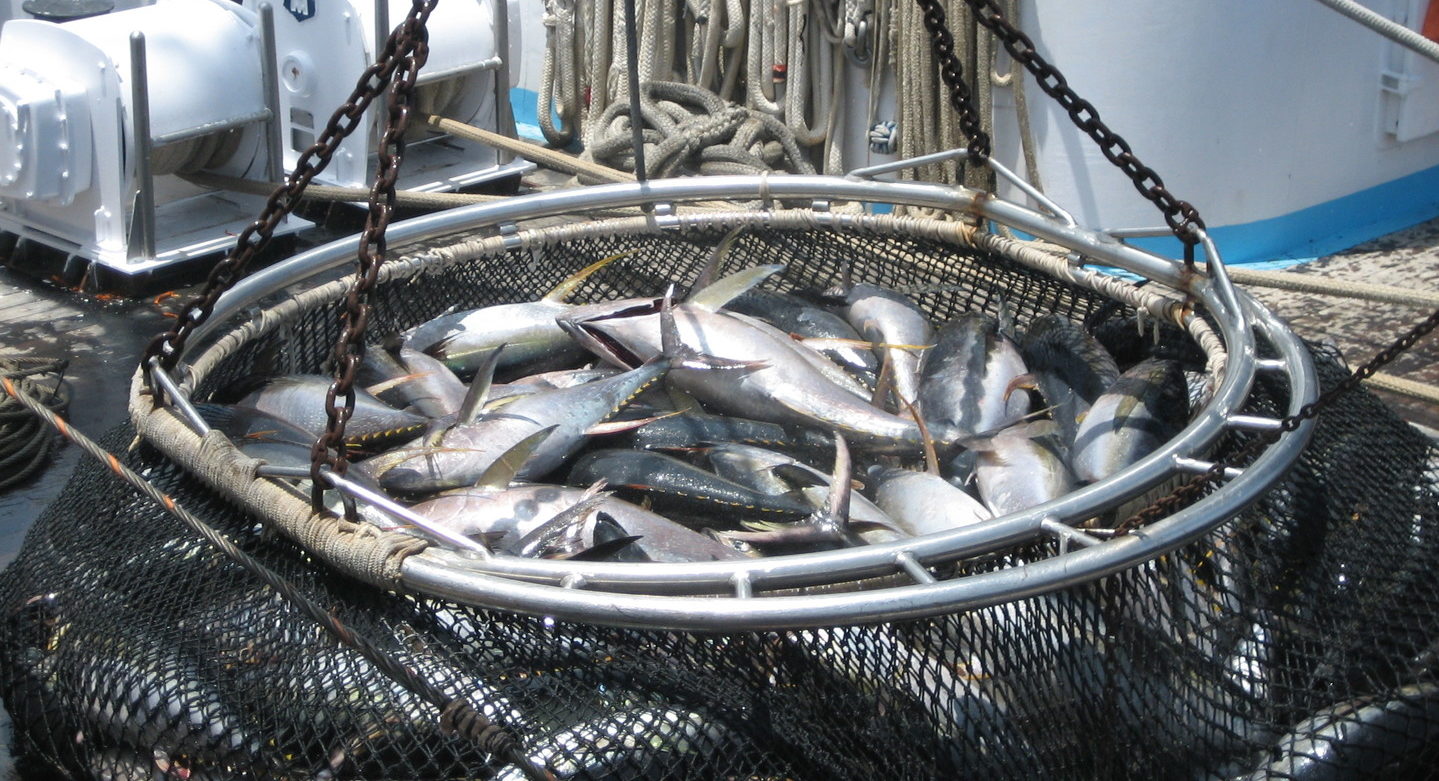
It also calls for an end to commercial fishing and aquaculture, greater recognition of fishes and other aquatic animals as individuals and investment in non-animal research and teaching methods. Vegan Australia says a national strategy must establish not only a direction for change, but a destination.
Read the full submission below.
Vegan Australia welcomes the opportunity to comment on the Working Draft - Australian Animal Welfare Strategy. We made a submission to the renewal process in June 2024. Our central concern remains: the proposed strategy recognises the sentience of animals but does not establish an objective of ending their exploitation. We ask that the final strategy recognise animals' fundamental rights and establish the abolition of animal exploitation as its long-term destination, beginning with a 10-year phase-out of animal agriculture.
Vegan Australia is a national organisation advocating for veganism and recognition of the fundamental rights of all animals. We envision a world in which our fellow animals live free from human use and ownership. This submission addresses the draft's overarching vision and priorities, with particular attention to animal agriculture and aquatic animals. It proposes actions that move towards ending animal exploitation rather than entrenching it under different conditions.
Section 2 of the draft recognises that sentient animals can feel and perceive their surroundings and states that Australians value animals' lives "beyond the benefits they provide to people" [1, p. 4]. The evidence that other animals have subjective experiences is substantial. The 2024 New York Declaration on Animal Consciousness identifies strong scientific support for conscious experience in other mammals and birds, and at least a realistic possibility in all vertebrates, including fishes, and many invertebrates [2]. This evidence is relevant throughout the strategy, not only to species most familiar to humans.
Sentient animals have interests in continuing to live, maintaining bodily integrity and exercising freedom. These interests give rise to fundamental rights that humans have an obligation to recognise and respect. Scientific evidence can establish the capacities and experiences of animals; the recognition of their rights is an ethical conclusion about how we must respond to that evidence. Rights are not dependent on an individual's usefulness to humans or on whether their exploitation can be made less painful.
The draft fails to carry its recognition of sentience through to this conclusion. Immediately after acknowledging that animals' lives matter beyond human benefit, it adopts a welfare definition that includes "humane slaughter or killing" [1, p. 4]. It thereby continues to accept that animals may be bred, owned, confined and killed for human purposes. A strategy that recognises the inherent value of animals' lives should oppose the use of animals, rather than merely prescribe the conditions under which it continues.
The draft's vision is that Australia achieves good animal welfare outcomes through science- and evidence-based practices and standards [1, p. 2]. Its priority areas are directed towards better coordination, standards, reporting, research, education and international engagement [1, pp. 9-13]. None of these priorities identifies what the strategy should ultimately achieve for the animals themselves.
Continuous improvement is a process, not a destination. How will Australia know when this strategy has succeeded? If the answer is that standards will always be improved, the exploitation of animals may continue indefinitely, with each new set of practices replacing the previous one. Practices accepted today may be prohibited under future welfare standards. There is no reason to restrict this process to different conditions of exploitation rather than address exploitation itself.
A national strategy should establish a direction for change and a destination. Existing institutional arrangements, industry practices and regulatory responsibilities are starting conditions, not limits on what a long-term strategy may propose. A strategy should identify the reforms necessary to achieve its objectives, including reforms that require new institutions or legislation. Its destination should be a society in which animals are no longer treated as property or resources for human purposes.
We propose that the vision be replaced with: "To establish and uphold a society in which people respect the rights of all animals to their own lives, bodies and freedom, enabling them to live free from human exploitation, use and ownership." The strategy should adopt the abolition of animal exploitation as its long-term national objective and set measurable steps towards it.
The draft repeatedly states that animal welfare should be underpinned by science and evidence [1, pp. 2, 9-12]. Science can tell us not only how animals experience confinement, transport and killing, but also whether humans need the products obtained through these practices.
Evidence on sentience establishes that farmed animals are individuals capable of experiences that matter to them [2]. In animal agriculture they are deliberately bred and their lives and bodies controlled so that humans can obtain their flesh, milk, eggs, wool, skins and other products. Even where conditions meet a prescribed welfare standard, their continued lives and freedom are subordinated to production. This is a question of rights, not only of pain or distress.
Human nutrition does not require the use of animals for food. The Academy of Nutrition and Dietetics' 2025 position paper concludes that appropriately planned vegan dietary patterns can be nutritionally adequate for non-pregnant, non-lactating adults [3]. Nutritional adequacy depends on obtaining all required nutrients, including reliable vitamin B12 from fortified foods or supplements, and appropriate planning is important for different ages and circumstances [4]. The scientific evidence therefore refutes the claim that consuming animal-derived foods is intrinsically necessary for human nutrition. It does not mean that all unplanned diets are adequate or that access and nutrition challenges can be ignored.
If the government is serious about protecting the interests of animals, it should seek to end their exploitation, particularly when the use to which they are put is unnecessary, as with food production. The draft repeatedly places animal agriculture within the context of food security, industry productivity and trade [1, pp. 39-42]. Food security is essential, but it does not follow that Australia must continue to exploit animals to provide food. A strategy informed by science should investigate and support reliable, accessible and nutritionally adequate food systems that do not depend on breeding and killing animals.
Vegan Australia calls for a nationally coordinated phase-out of animal agriculture within ten years. This should be an explicit goal of the AAWS, not a distant aspiration left outside its scope. The ethical obligation to respect animals' rights exists now; the timetable is for the structural changes required to replace established production systems while supporting affected people and communities.
The phase-out should cover the commercial breeding, use and killing of animals for food, fibre and other agricultural products. Commonwealth, state and territory governments should coordinate the necessary policy changes, research and investment. The destination is an agricultural system that no longer depends on animal exploitation, rather than one that simply uses animals differently.
The strategy should initiate a national transition plan with clear interim milestones. In its early years, governments should establish the policy objective, commission independent research into agricultural and nutritional requirements, examine land and infrastructure needs, identify affected communities and develop financial and employment transition support. Subsequent stages should shift public investment, expand animal-free food and fibre production and progressively reduce commercial animal breeding and use. The final stage should complete the phase-out and evaluate outcomes against the reduction and cessation of animal exploitation, rather than only welfare compliance.
Farmers, agricultural workers and regional communities should not be left to bear the costs of public policy change alone. Government assistance should support changes to suitable crop production, food processing, land restoration, ecological repair and other employment that does not depend on animal use. Research and planning should address regional climate, soils, water, markets, supply chains and the needs of people whose livelihoods would change.
New publicly funded infrastructure and programs should be assessed against the transition objective. Subsidising or promoting additional facilities for breeding, confining, transporting and killing animals risks locking in the existing system for decades. Support should instead facilitate the move away from animal use. Projects intended chiefly to make animal production more efficient or commercially viable should not be presented as progress towards abolition.
The draft states that the Commonwealth agriculture portfolio both supports the agricultural and fisheries sectors and provides national leadership on animal welfare policy [1, p. 5]. It also accords animal-using industries extensive roles in developing welfare standards, funding research and operating assurance and certification schemes [1, pp. 6-7, 39-42]. This creates structural conflicts between promoting commercial animal use and protecting the interests of those animals.
The strategy should establish an independent national animal protection authority, separate from government portfolios responsible for promoting animal-using industries and insulated from commercial control. Its statutory purpose must be explicit: to lead, coordinate and monitor the progressive abolition of animal exploitation, beginning with the 10-year phase-out of animal agriculture. Without that mandate, such an authority risks becoming another body overseeing the conditions under which animals continue to be used.
The authority should develop the national transition plan, coordinate with state and territory governments, commission independent research, set and publish milestones and report annually to the public and parliament. Industry participants may provide evidence about the practicalities of transition, but those who benefit commercially from animal exploitation should not determine the ethical objectives or exercise control over animal protection policy. The authority must have meaningful independent expertise in animal sentience, ethics, law, agriculture, public health, ecology and economic transition.
The draft correctly devotes a distinct chapter to aquatic animals, including commercial fishing, aquaculture and recreational fishing. Yet chapter 9 remains almost entirely concerned with industry viability, management, standards and better methods of capturing and killing animals [1, pp. 30-33]. Fishes and other aquatic animals are individuals, not simply tonnes of production, catches or farm populations. Scientific evidence of possible conscious experience extends beyond mammals and birds to fishes and numerous invertebrates [2]. Uncertainty about the experiences of particular species is not a reason to disregard their interests.
The scale of aquatic animal use is commonly obscured because wild-caught fishes are reported largely by weight rather than by individual number. This makes precise comparisons with terrestrial animal agriculture difficult, without making the animals any less important. The strategy should recommend reporting individual estimates wherever scientifically feasible, distinguish deaths caused by fishing from incidental capture and include animals bred or confined in aquaculture and other affected aquatic animals. Numerical precision should not become a precondition for recognising their rights.
Chapter 9 acknowledges that definitions and exemptions mean that some aquatic animals and fishing practices are not covered by general animal welfare legislation [1, p. 30]. Extending welfare standards to additional species would not address the underlying problem: the claimed entitlement to capture, confine, breed and kill these animals. Certification of fishing or aquaculture as "responsible" or "ethical" does not remove the underlying violation of their interests in living and remaining free.
The renewed strategy should set a clear objective of ending commercial fishing and aquaculture and initiate a transition plan for these sectors. That work should encompass livelihoods and coastal and regional communities, the development of animal-free food supply, restoration of marine and freshwater habitats and the redirection of public research and investment away from practices that depend on capturing or killing sentient aquatic animals. Recreational fishing, ornamental fish breeding and commercial display should also be addressed under the broader objective of ending animal exploitation.
The strategy's separate treatment of commercially captured aquatic animals and free-living aquatic animals should not lead to different moral consideration based on the reason humans interfere with their lives. The interests of an individual fish do not change when they cross a regulatory boundary between a fishing area, an aquaculture facility and a protected habitat.
Priority area 5 proposes showcasing best practice and promoting public understanding of animal welfare standards [1, p. 12]. The draft also discusses retailers influencing production practices and people shaping demand through purchasing decisions [1, p. 7]. This is insufficient. Education focused on reassuring the public about improved animal-use practices risks reinforcing the assumption that those practices are legitimate.
Public education should explain animal sentience, the rights of animals, speciesism and the ways in which laws and everyday language normalise the treatment of sentient individuals as property. It should present accessible, evidence-based information about vegan nutrition and animal-free ways of meeting human needs. Educational material should distinguish between improving the treatment of animals while they are exploited and ending their exploitation. The responsibility for systemic change belongs to government and institutions as well as individuals.
The strategy itself should avoid describing animals solely as "production animals", "stock", "resources" or contributors to economic activity without recognising the individuals behind these categories. Such terms may sometimes be needed when describing existing law or industry systems, but should not define the moral standpoint of a national animal policy.
Animals used in research, teaching and testing also have rights to their own lives, bodies and freedom. The draft recognises non-animal methodologies and cites CSIRO work on non-animal models [1, pp. 23-24]. CSIRO identifies growing opportunities for human-derived or humanised models that may complement or replace animal models and, in some applications, improve prediction of medical product safety and efficacy [5].
The strategy should give priority to funding, validation, adoption and teaching of non-animal methods, including alternatives to dissection in education. It should also establish comprehensive, consistent national reporting of animals bred and used for research, teaching and testing. The draft itself acknowledges that Australia lacks centralised national animal-use statistics [1, p. 23]. Reporting should expose the scale of use and help track its replacement, not be taken as legitimising experimentation on sentient individuals.
The same principle applies to animals used in racing, entertainment, sport, tourism and display. Rehoming programs or improved standards cannot by themselves justify breeding and using animals for these activities. The strategy should identify pathways to end commercial and recreational practices that depend on animals being used as instruments of entertainment or profit, while providing appropriate lifelong care for animals already affected.
Free-living animals should be recognised as individuals with interests in their own lives and habitats, not merely as members of managed populations or as "pests". The draft allows for lethal control of native and introduced animals [1, pp. 18-20]. Future policy should prioritise preventing human-caused conflict, habitat protection, non-lethal responses and the development of approaches that respect individual animals. Protection of ecosystems should not automatically erase the interests of the animals who live within them.
For companion animals, the long-term objective should be respectful relationships rather than ownership or commercial breeding. The strategy should support rescue, care and secure homes for animals who already depend on humans, while planning to end breeding and trade that treats them as commodities. The rights-based destination applies consistently across the draft's six animal groups, even though the practical routes to it will differ.
The consultation process has received submissions advocating the recognition of animals' fundamental rights and the abolition of animal exploitation, including Vegan Australia's submission in 2024 [6]. However, the published consultation summaries and the 2026 working draft do not explicitly acknowledge this position. Instead, discussion remains overwhelmingly within a framework that assumes continued animal use and considers how that use should be regulated [1, 7].
A genuinely comprehensive national strategy should recognise that some Australians reject the underlying assumption that animals may legitimately be used for human purposes. The Productivity Commission's 2016 inquiry acknowledged that some Australians do not consider commercial animal use appropriate [8]. That position should be considered in setting the strategy's long-term direction, not treated as outside scope simply because it challenges existing institutions and practices.
The draft recognises that sentient animals have experiences and lives that matter beyond their usefulness to humans. Yet its proposed destination goes no further than improving the conditions under which these animals are used. A framework that continues to measure success by improved practices, industry assurance and the conditions of killing leaves the underlying exploitation intact.
The question for a renewed national strategy is not only how humans should treat animals while using them. It is whether a society that recognises sentient individuals and their inherent interests should continue to use them as resources. The destination should be the abolition of animal exploitation. Australia can begin now with a coherent, evidence-informed and justly managed 10-year phase-out of animal agriculture, supported by independent leadership and a transition away from the use of aquatic animals and other forms of exploitation.
Greg McFarlane
Vegan Australia
Unsubscribe at any time. Your details are safe, refer to our privacy policy.
© Vegan Australia | Registered as a non-profit charity by the ACNC | ABN 21 169 219 854