
Most people buying a pregnancy test would have no reason to suspect that animals were involved in making it.
Yet conventional pregnancy tests rely on antibodies that have traditionally been produced using animals or animal-dependent cell-culture systems. This animal use is hidden within the manufacturing process and is not apparent from the finished product.
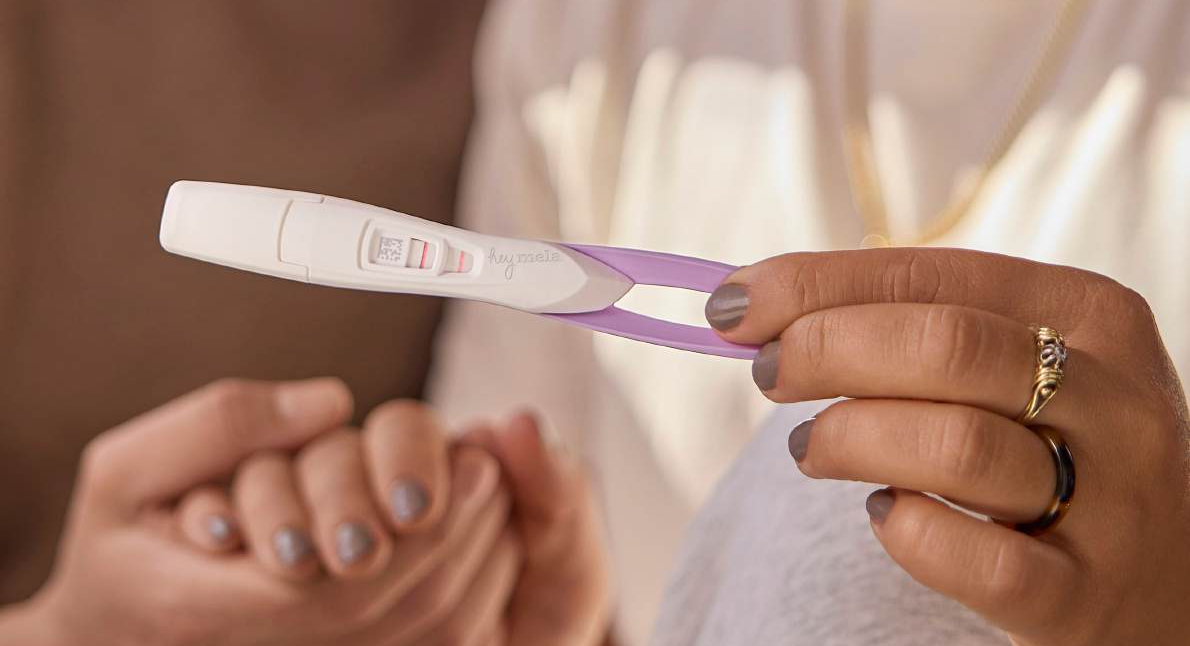
Now there is good news. German biotechnology company Phaeosynt has developed a pregnancy test using antibodies produced in microscopic algae called diatoms rather than animals. Its hey mela pregnancy test is already commercially available in Germany and other parts of the EU, including through the company's online shop. Phaeosynt is exploring bringing it to Australia.
This development matters not only because it provides an animal-free pregnancy test. It also shows that forms of animal use long treated as a normal part of manufacturing can be designed out of the system.
Pregnancy tests detect human chorionic gonadotropin, or hCG, a hormone produced during pregnancy. Antibodies are a crucial part of the test because they recognise and bind to hCG, allowing the test result to become visible.

Conventionally, these antibodies have been produced by immunising animals or through animal cell cultures. Animal-derived materials such as foetal calf serum and bovine serum albumin can also be used in the production process.
This is part of a much larger system of animal use. The European Union Reference Laboratory for alternatives to animal testing estimates that around one million animals are used each year in the EU for the development and production of antibodies. Exact figures cannot be given because animals used for antibody development and production are spread across several official statistical categories.
There is no reliable worldwide total. Given the scale of animal use for antibody production in Europe alone, however, millions of animals are likely to be used globally each year.
For someone buying a pregnancy test, none of this would normally be visible on the packaging.
Phaeosynt has developed another way of producing the antibodies needed for pregnancy tests.
Instead of relying on animals or animal-dependent cell cultures, the company produces antibodies in diatoms. Its hey mela pregnancy test uses these antibodies to detect hCG and, according to the company, is made without animal-derived components and without animal testing.
The test is more than 99 per cent accurate from the date a period is due and is already sold in Germany.
This means that people do not need to avoid pregnancy testing in order to avoid this particular use of animals. The same function can be performed without incorporating animals into the production process.
That is an important distinction.
Animal-derived antibodies are used much more widely in medicine, diagnostics and scientific research. But where people need a medical test, medicine or treatment and there is no suitable animal-free equivalent available, they should not avoid necessary healthcare.
Veganism includes avoiding animal use as far as is possible and practicable.
Pregnancy tests are especially relevant because, in this case, an animal-free alternative now exists. People can obtain the information they need without supporting a production process that depends on animals.
There is also strong evidence that animal-free antibody technology has much wider potential. The European Commission's scientific advisers concluded that non-animal-derived antibodies are mature technologies and are capable of replacing animal-derived antibodies in the vast majority of applications. The EU Reference Laboratory has recommended that animals should no longer be used for antibody development and production where there is no robust scientific justification for doing so.
This does not mean that every medical use of animals can already be replaced. It does show that continued animal use should not simply be accepted because it is established practice.
Pregnancy tests illustrate a wider problem.
Animals have been incorporated into manufacturing and research systems in ways most people have never been made aware of. Their involvement may occur far back in a supply chain, during processing or in the production of specialised biological materials, rather than appearing as an obvious ingredient in the final product.
This is one reason vegan certification can be important. Determining whether a product is vegan may require looking beyond the ingredient list to investigate manufacturing processes, processing aids, testing and the origins of less obvious ingredients and components.
People should not be expected to uncover hidden animal use buried within complex manufacturing processes and supply chains. Manufacturers know how their products are made and are in a much better position to identify where animals are being used and to replace those processes.
The animal-free pregnancy test provides an encouraging example of what can happen when established practices are questioned rather than animal use being treated as inevitable.
The fact that animals have traditionally been used in a production process is not a reason to continue using them when the same function can be achieved without animal use.
Animal-free antibody technologies also challenge the idea that ending animal use necessarily means abandoning useful products or technologies. The better response is to change the way they are made.
Industries should redesign production systems so animals are no longer treated as biological resources.
The development of animal-free pregnancy tests shows that such change is already possible. As other hidden forms of animal use are identified, the same question should be asked: can this product or process be redesigned without using animals?

Unsubscribe at any time. Your details are safe, refer to our privacy policy.
© Vegan Australia | Registered as a non-profit charity by the ACNC | ABN 21 169 219 854